

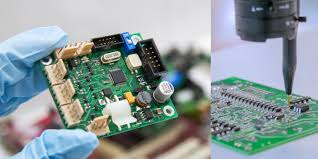
The foundation of every electronic device—from smartphones to industrial automation systems—rests on carefully engineered printed circuit boards that translate conceptual circuit designs into physical reality. While circuit schematics define what components connect and how signals flow, PCB design determines whether those connections deliver intended performance or introduce problems that compromise functionality, reliability, or manufacturability. The difference between mediocre and exceptional electronic products often lies not in component selection or firmware sophistication, but in the physical PCB implementation that either enables or constrains overall system performance. Understanding fundamental design principles that govern successful PCB development separates functional prototypes from production-ready designs capable of operating reliably across demanding real-world conditions.
Signal Integrity: Managing Electrical Behavior
Modern electronics operate at speeds where physical PCB characteristics profoundly impact signal quality. Traces carrying high-frequency signals don’t simply conduct electricity—they behave as transmission lines with impedance, capacitance, and inductance that must be carefully controlled to prevent signal degradation, reflections, and electromagnetic interference.
Trace impedance matching ensures signals propagate cleanly between components without reflections that cause ringing, overshoot, or false triggering. Differential pairs carrying high-speed data—USB, HDMI, Ethernet, PCIe—require precise geometric control maintaining consistent spacing and routing to preserve signal integrity across the entire path length. Even minor variations in trace width, spacing, or distance to ground planes can degrade signals enough to cause intermittent failures difficult to diagnose and impossible to resolve without PCB redesign.
Ground plane continuity provides reference potential for signal returns while minimizing ground loops and voltage drops that inject noise into sensitive circuits. Segmented or inadequate ground planes create return current paths that induce crosstalk between adjacent signals, while solid planes with strategic via placement ensure clean signal returns that maintain integrity across complex multi-layer designs.
Layer stackup configuration determines how electromagnetic fields interact between signal layers and power/ground planes. Proper stackup places high-speed signals adjacent to continuous ground planes, providing electromagnetic shielding and controlled impedance environments. Poorly conceived stackups that place signal layers adjacent to each other without intervening reference planes invite crosstalk that compromises reliability regardless of other design considerations.
Power Distribution and Decoupling Strategies
Stable power delivery represents a critical design challenge often underestimated until prototype testing reveals noise, instability, or inconsistent behavior across operating conditions. Components don’t draw steady current—they create transient demands that can cause voltage droops if power distribution networks lack adequate design.
Effective printed circuit board design implements comprehensive decoupling strategies placing capacitors strategically near power pins of active components. These capacitors supply instantaneous current demands faster than power traces or voltage regulators can respond, preventing voltage sags that cause logic errors, analog noise, or system resets. However, capacitor placement matters enormously—capacitors located millimeters from intended power pins deliver minimal benefit compared to immediate proximity placement.
Power plane design influences distribution network impedance and decoupling effectiveness. Dedicated power and ground planes on internal layers provide low-impedance paths reducing voltage drops across the board. Via placement connecting component power pins to internal planes must minimize inductance that limits decoupling capacitor effectiveness at high frequencies.
Voltage regulator placement and thermal management integrate with power distribution considerations. Regulators dissipating significant heat require thermal relief while maintaining stable output despite varying loads. Poor thermal design causes voltage regulators to overheat, reducing efficiency and potentially entering thermal shutdown that disables entire system sections.
Thermal Management Integration
Heat represents one of electronics’ primary reliability threats, accelerating component aging, reducing performance, and eventually causing complete failure. Effective PCB designs integrate thermal management from initial conception rather than attempting to retrofit cooling solutions after discovering thermal problems during testing.
Copper pour areas function as heat spreaders, conducting heat away from hot components toward board edges or thermal vias connecting to heatsinks or chassis grounds. The thermal mass that copper provides helps even out temperature gradients that might otherwise create thermal stress on components and solder joints.
read more : https://quik-console.com/
Component placement considers both electrical requirements and thermal constraints. High-power components clustered together create hot spots that overwhelm local cooling capacity, while strategic spacing allows airflow or conduction paths to dissipate heat effectively. Sensitive analog circuits require isolation from temperature variations that affect precision, necessitating placement away from power components generating significant heat.
Thermal vias conduct heat through PCB layers to opposite surfaces where heatsinks, fans, or larger copper areas assist dissipation. The number, size, and placement of thermal vias significantly impacts thermal resistance between components and cooling mechanisms. Inadequate thermal via implementation leaves components thermally isolated despite presence of heatsinks or cooling features.
Design for Manufacturability
Brilliant designs that can’t be reliably manufactured at reasonable costs fail regardless of their theoretical performance. Design for manufacturability (DFM) principles ensure PCB assembly processes can consistently produce boards meeting specifications without excessive rework or yield losses.
Minimum trace widths and spacing must account for fabrication tolerances and capabilities. While modern PCB manufacturers can produce very fine features, pushing capability limits increases costs and reduces yields. Conservative feature sizing that exceeds minimum capabilities by comfortable margins ensures consistent fabrication quality across production runs.
Via sizing and placement affects both fabrication and assembly processes. Excessively small vias increase drilling costs and failure rates, while vias too close to component pads complicate solder paste application and reflow processes. Standard via sizes that align with fabricator capabilities and maintain adequate clearances from pads optimize manufacturing efficiency.
Component footprints must provide adequate solder pad sizes, spacing, and thermal relief allowing reliable soldering without bridging or cold joints. Custom footprints created without understanding assembly processes often cause soldering defects requiring expensive rework or creating latent reliability issues from marginal solder joints.
Solder mask and silkscreen design prevents solder bridging while providing clear component identification and polarity markings that minimize assembly errors. Solder mask between fine-pitch component pads acts as a physical barrier preventing solder bridges, while clear silkscreen markings reduce assembly mistakes that might escape inspection until field failures occur.
Layer Count Optimization
Layer count represents a significant cost driver in PCB fabrication, yet too few layers compromise signal integrity, power distribution, and routing density. Optimal layer count balances electrical performance requirements against manufacturing costs and physical constraints.
Two-layer boards suit simple, low-speed circuits but struggle with power distribution, ground plane continuity, and electromagnetic compatibility as complexity increases. Four-layer designs adding dedicated power and ground planes dramatically improve performance for moderate-complexity circuits, providing the minimum layer count for most professional electronics development.
Six or more layers become necessary for high-speed digital designs, mixed-signal circuits requiring analog/digital isolation, or dense routing that can’t be completed in fewer layers. Each additional layer pair increases fabrication costs, but attempting to eliminate necessary layers through aggressive routing creates signal integrity problems, manufacturing difficulties, or impossible designs that can’t be completed within board area constraints.
Test Point and Debug Considerations
Production boards require test points enabling functional testing, troubleshooting, and field service without requiring component removal or destructive probing. Strategic test point placement provides access to critical signals, power rails, and ground references that facilitate rapid diagnosis of issues.
Test points must remain accessible after assembly, avoiding locations obscured by components or mechanical features. Standardized test point spacing and grid alignment enable automated testing with bed-of-nails fixtures or flying probe systems that reduce testing time and cost while improving coverage.
Debug header provision during development phases provides expanded access to signals for oscilloscope probing, logic analyzer connection, or in-circuit debugging. These headers can be depopulated in production versions but their footprints should remain in PCB designs allowing field debugging if necessary without requiring different board revisions.
Documentation and Design Validation
Comprehensive design documentation ensures manufacturing partners understand requirements, assembly teams place components correctly, and future redesigns or troubleshooting efforts can proceed efficiently. Documentation extends beyond circuit schematics to include detailed assembly drawings, bill of materials with manufacturer part numbers, and fabrication notes specifying critical requirements.
Design rule checks validate that layouts comply with fabrication capabilities and electrical requirements before releasing designs for manufacturing. Automated DRC catches many errors, but manual review remains essential for identifying issues that automatic checks miss—signal routing that technically meets rules but violates good practices, or thermal problems that manifest during operation rather than fabrication.
Prototype validation before committing to production quantities identifies design flaws, manufacturing issues, or performance problems requiring correction. Companies like Precision Electronics understand that thorough prototype testing and validation prevents the far greater costs of discovering fundamental problems after production commitments.
Continuous Improvement Through Feedback
Design excellence develops through iterative refinement informed by manufacturing feedback, field performance data, and testing results. Each design iteration should incorporate lessons from previous projects, gradually building institutional knowledge that prevents recurring problems while establishing best practices suited to specific product families or applications.
Manufacturing feedback identifying assembly difficulties, yield issues, or quality escapes should directly influence future designs. Close collaboration between design and manufacturing teams creates feedback loops that continuously improve both design quality and manufacturing efficiency.
Field failure analysis revealing design-related reliability problems must inform corrective actions in current products and preventive measures in future designs. Understanding root causes—inadequate thermal management, poor solder joint reliability, signal integrity problems—prevents repeating expensive mistakes across product portfolios.
Successful PCB design synthesizes electrical engineering principles, manufacturing knowledge, and practical experience into physical implementations that reliably deliver intended functionality across diverse operating conditions. The principles outlined here provide foundation for developing high-performance electronics, though mastery requires continuous learning through hands-on experience, failure analysis, and engagement with evolving technologies that constantly redefine what’s possible in electronic design.