
Ductwork in an unconditioned attic operates in the harshest part of the building. In summer, it is surrounded by radiant heat, and in winter, it sits in a cold zone that punishes every weak seam. When insulation is missing, compressed, or poorly sealed, the HVAC system pays twice: the air loses energy in the run, and the equipment runs longer to compensate. Contractors evaluate attic duct insulation because comfort complaints, high bills, and uneven rooms often trace back to the attic long before anyone blames the duct system. A careful evaluation looks beyond the insulation label and focuses on how the insulation actually performs in place.
Why Attic Duct Insulation Deserves A Closer Look
- Field checks, measurement, and practical fixes
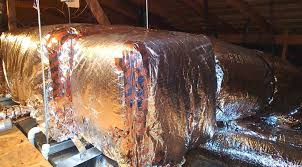
Before instruments come out, contractors do a disciplined visual survey that focuses on performance clues, not appearances. They check whether the duct insulation is continuous along the entire run, including elbows, takeoffs, boots, and the hard-to-reach back sides that are often overlooked. They look for compression from tight strapping, storage items, or foot traffic because compressed insulation can lose a significant share of its effective R-value. They also check for gaps at seams, torn jackets, and loose vapor barriers that let attic air wash through the insulation layer. Support spacing matters too, because sagging flex duct creates low spots where insulation bunches up, and airflow slows, increasing heat gain and pressure loss. Contractors also note the attic environment itself: dark roof decks, missing ventilation, or blocked soffits can raise attic temperatures and turn marginal duct insulation into a major load driver. These observations set the stage for the rest of the evaluation by identifying where to test first and which defects are likely causing the actual losses.
- How Temperature And Pressure Reveal Hidden Losses
A sharp evaluation ties attic conditions to measurable system behavior. Contractors often start by comparing the supply air temperature at the air handler to temperatures at distant registers, because a consistent rise along the run indicates heat gain through the duct jacket or leakage drawing in hot attic air. They also check static pressure and airflow performance because restricted, kinked, or crushed ducts can mimic insulation issues while actually being a delivery problem. When conditions allow, infrared scanning helps identify hot stripes along a duct run that indicate missing insulation, jacket failure, or air leakage at seams and collars. The key is to interpret patterns rather than single readings. A uniformly warm duct may be underinsulated for the attic temperature.
In contrast, a duct with isolated hot spots often indicates a disconnected sleeve, torn jacket, or poorly sealed takeoff. This is also where contractors connect building operations to service outcomes, and a reputable crew like Semper Fi Heating and Cooling for HVAC repair in Summerlin will often document these readings so property teams can track improvements after repairs. The result is a diagnosis that distinguishes conduction through insulation from losses caused by leakage or poor airflow setup.
- Separating Insulation Problems From Leakage Problems
Insulation and leakage are linked, but they are not the same defect, and contractors treat them differently. If duct leakage is pulling attic air into the system, adding insulation alone will not resolve comfort or humidity complaints because the airflow is contaminated, and the equipment runs longer to overcome the loss. Contractors examine joints, plenums, collar connections, and transitions where tape has failed, or mastic was never applied. They pay close attention to boots at ceiling penetrations because gaps around the boot can create an attic bypass that behaves like duct leakage even when the duct itself is intact. Condensation risk is part of this evaluation, especially where cold supply air meets humid attic air at an unsealed seam, creating wet insulation that can reduce performance and stain ceilings below. Contractors also check whether the vapor barrier jacket is oriented and intact, because a torn jacket can allow moisture intrusion and degrade insulation over time. When insulation defects are confirmed, they verify that the installed thickness matches the job intent, that it is not compressed, and that repairs maintain a continuous thermal blanket. The most durable fixes combine air sealing with insulation restoration, because sealing stops the energy loss and the insulation slows heat transfer across the duct wall.
Closing The Gap Between Labels And Performance
Duct insulation in an unconditioned attic is only as good as its installation quality and its ability to stay intact through seasons, service visits, and attic traffic. Contractors evaluate it by walking the runs, spotting compression and jacket failures, and then validating their observations with temperature checks, pressure indicators, and targeted scanning. They separate heat gain through the insulation from losses caused by leakage, because the correction strategy and budget impact differ. For building owners and managers, the practical takeaway is that attic duct insulation should be treated as a system component rather than a background detail. When contractors document findings and tie repairs to measured improvements at the registers, the work becomes verifiable. That verification protects comfort, reduces runtime, and helps equipment last longer because the system is no longer fighting the attic on every cycle.