

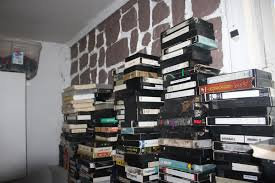
Your home movies are disappearing right now. VHS tapes have a biological clock, and most tapes recorded before 2000 are already in advanced stages of decay. If you have a box of tapes sitting in your basement or closet, time is working against you. The solution is simple: VHS to digital conversion. Do it before those irreplaceable memories are gone forever. Trusted options like a professional VHS to digital conversion service can preserve your footage safely, accurately, and affordably.
What VHS Deterioration Actually Looks Like?
VHS deterioration is not a future problem. It is happening right now to tapes on your shelf. The damage appears gradually, so many people do not notice until playback becomes impossible.
Common signs of VHS deterioration include:
- Washed-out or faded colors during playback.
- Horizontal lines or static across the screen.
- Muffled or distorted audio.
- A sticky, gummy residue on the tape itself, called sticky shed syndrome.
- A musty or vinegar-like smell coming from the cassette.
- Complete inability to play the tape without the VCR jamming.
What Is The Science Behind Why VHS Tapes Fail?
VHS tapes store video as magnetic particles suspended in a binder layer attached to a polyester base. Over time, both the binder and the magnetic layer break down due to three main forces:
| Cause of Failure | What Happens | Timeline |
|---|---|---|
| Hydrolysis | Moisture causes the binder to break down, making the tape sticky | 10-25 years |
| Oxidation | Magnetic particles lose their charge, erasing recorded data | 15-30 years |
| Physical Stress | Repeated play and rewind stretches or warps the tape | Varies by use |
| Mold Growth | Humidity above 60% allows mold to grow on the binder surface | Months to years |
| Heat Exposure | High temperatures accelerate chemical breakdown significantly | Accelerates all the above |
The key takeaway here is that VHS deterioration does not require neglect. Even a tape stored carefully in its original case will eventually fail. The chemistry is inevitable. This is why VHS to digital conversion is not optional for anyone who wants to keep their memories.
What Are The Signs Your Tapes Are at Risk Right Now?
Not all tapes deteriorate at the same speed. Storage conditions, tape brand, and how often the tape was played all affect the timeline. Here is a quick risk assessment:
| Storage Condition | Risk Level | Action Needed |
|---|---|---|
| Climate-controlled, cool and dry | Low | Convert within 2-3 years |
| Room temperature with humidity variation | Medium | Convert within 1-2 years |
| Attic, basement, or garage storage | High | Convert immediately |
| Exposed to heat or flooding | Critical | Professional evaluation now |
| Already showing playback problems | Emergency | Do not play again; seek help |
Why Waiting Is Not an Option?
Every year you wait increases the risk of total, unrecoverable loss. VHS deterioration accelerates once it begins. A tape that plays poorly today may not play at all in 12 months. Here is why urgency matters:
- VCR players are becoming increasingly rare and expensive to maintain.
- Replacement parts for VCR repair are no longer manufactured.
- Once the magnetic layer is gone, no technology can recover the footage.
- Digitize home movies now, and you can share them across any device, anywhere, forever.
How to Convert VHS Tapes: Your Three Main Options
When you are ready to convert VHS tapes, you have three paths available. Each has trade-offs worth understanding.
Option A: DIY Conversion
You purchase a VHS-to-USB capture device, connect your VCR to a computer, and record the output in real time. This approach works for tapes in good condition, but it requires a functioning VCR, technical setup, and time. Damaged tapes need professional handling.
Option B: Retail Kiosk Services
Some retail chains offer basic tape transfer services. These are high-volume, low-customization services. They may not handle damaged tapes carefully, and output quality varies widely.
Option C: Professional Digitization Services
This is the recommended route for most people. A professional VHS to digital conversion service uses calibrated equipment, trained technicians, and controlled environments. They can handle tapes with VHS deterioration that DIY setups cannot manage. If your goal is to digitize home movies with the best possible output quality, professionals are the clear choice.
What to Expect From Professional VHS to Digital Conversion?
When you send your tapes to a reputable digitization service, the process typically follows these steps:
- Tape intake and condition assessment by trained staff.
- Gentle cleaning of the tape housing and heads, if needed.
- Real-time playback capture using broadcast-grade equipment.
- Output to your chosen digital format: MP4, MOV, or DVD.
- Quality check of the final digital file.
- Secure return of your original tapes with the digital files.
Choosing the right format matters. MP4 files are the most universally compatible, working on smartphones, smart TVs, tablets, and computers. When you digitize home movies in this format, you ensure playback for the next several decades without format obsolescence.
Tips to Extend Tape Life Before You Convert
If you cannot convert VHS tapes immediately, follow these storage guidelines to slow VHS deterioration:
- Store tapes vertically, like books on a shelf, never flat.
- Keep storage temperature between 60 and 70 degrees Fahrenheit.
- Maintain relative humidity between 30% and 50%.
- Avoid plastic bags, which trap moisture and accelerate mold growth.
- Store in a dark location, away from direct sunlight and UV exposure.
- Fast-forward and rewind tapes fully before long-term storage to reduce edge stress.
The Bottom Line
VHS tapes are not built to last forever, and most of them have already passed their prime. VHS deterioration is silent, progressive, and irreversible. The only way to protect your home movies is to convert VHS tapes to a digital format before the damage becomes too severe.
Whether you choose to digitize home movies yourself or use a trusted professional service, the most important thing is that you start.
Do not let another year pass while your memories continue to fade. Every tape you convert is a piece of family history you are choosing to save.