

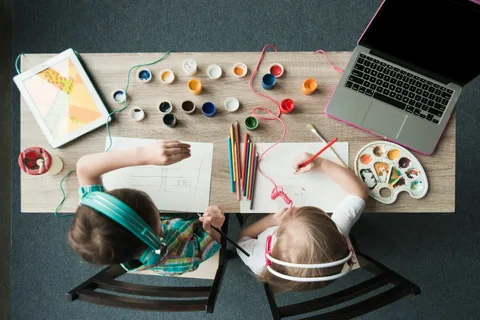
A child’s imagination can transform an ordinary afternoon into an exciting adventure. A simple pencil drawing might become a story about distant planets, while a collection of colorful shapes might turn into an imaginary city. Art gives children a way to bring these ideas to life, turning thoughts and feelings into something they can see, share, and develop.
For families in Vaughan and Thornhill, children’s art classes offer a structured opportunity to explore creativity while learning new techniques. Through drawing, painting, and other artistic activities, young learners can build skills that support both personal expression and everyday learning.
Turning Ideas Into Tangible Creations
Children often have imaginative ideas but may not know how to represent them visually. Art lessons can help bridge that gap by introducing practical techniques such as sketching basic shapes, combining colors, arranging objects, and adding details.
For example, a child who wants to draw a favorite animal might begin with simple circles and lines. With practice, those shapes can become a recognizable figure with texture, movement, and personality.
This process demonstrates how complex projects can develop from small, manageable steps. Children learn to plan their work, observe details, and adjust their approach as their ideas evolve.
The result is not simply a finished picture. It is an opportunity to understand how an idea can gradually become a creation through patience, experimentation, and practice.
How Kids Art Classes Encourage Problem-Solving
Art projects frequently present small challenges. A color may not look as expected, a drawing might seem unbalanced, or a painting may need additional details. Children must decide how to respond to these situations.
They might mix another color, rearrange the composition, or try a different technique. These decisions encourage flexible thinking and help children understand that challenges can have more than one solution.
In a supportive class, mistakes become opportunities to experiment rather than reasons to stop. Children discover that changing a plan can lead to interesting results.
These experiences can also encourage persistence. Completing a detailed drawing or learning a new painting technique often requires several attempts at Art Classes for Kids Thornhill . Gradually, children become more comfortable working through difficulties.
Discovering Color, Shape, and Texture
Art education introduces children to visual concepts through hands-on experience. They can learn how primary colors combine, how light and dark areas create contrast, and how lines and shapes influence the appearance of an image.
Different materials offer additional opportunities for exploration. Watercolors create soft effects, colored pencils allow detailed work, and textured materials can make mixed-media projects more engaging.
As children experiment, they begin to recognize relationships between artistic choices and visual results. They may discover that warm colors create a lively atmosphere or that changing the size of an object can make it stand out.
These observations encourage attention to detail and provide a foundation for more advanced artistic learning.
Developing Confidence Through Creative Expression
Every completed project gives children a chance to recognize what they have learned. They may feel proud of mastering a new technique, finishing a challenging drawing, or creating something that reflects their own imagination.
Art also provides a way to express ideas that can sometimes be difficult to explain in words. Children can represent favorite places, imaginary characters, meaningful experiences, or feelings through their choices of color and imagery.
Instructors can support this process by listening to children’s explanations and offering constructive feedback. Recognizing effort and improvement helps children understand that their creative decisions have value.
Parents exploring suitable learning opportunities can visit Dream Art Studio to review its offerings and consider whether a dedicated creative environment would suit their children.
Art and the Development of Fine Motor Skills
Many artistic activities require careful hand movements. Holding a pencil, controlling a paintbrush, cutting paper with age-appropriate scissors, and adding small details all involve coordination.
With repeated practice, children can improve their ability to control these movements. Art activities may also encourage hand-eye coordination as children observe shapes and reproduce them on paper.
Different projects introduce different levels of precision. Large brushstrokes encourage broader movements, while detailed drawings require greater control. A varied curriculum gives children opportunities to practice both.
These skills develop gradually, and children benefit from activities that match their age and current abilities.
Learning to Appreciate Different Perspectives
A group art class allows children to see how other students approach the same subject. Even when everyone receives a similar assignment, the results can be remarkably different.
One child may draw a realistic garden, while another imagines a colorful fantasy landscape. Both approaches provide opportunities to discuss creative choices and appreciate individual perspectives.
Sharing materials and working on collaborative projects can also encourage communication, cooperation, and respect. Children learn that artistic expression does not require everyone to think or create in the same way.
These lessons can make group activities more enjoyable while helping children become more open to new ideas.
Encouraging Creativity Beyond the Classroom
Parents can strengthen the value of art classes by making creative materials available at home. Paper, pencils, crayons, washable paints, and suitable craft supplies can provide opportunities for informal exploration.
Children might draw something they observed during a walk, illustrate a story they heard, or create a handmade gift for a family member. These projects connect artistic practice with everyday experiences.
It is also helpful to let children choose some of their own subjects. When they have ownership of a project, they may feel more motivated to explore details and develop original ideas.
Rather than correcting every unusual choice, adults can ask questions that encourage children to explain their thinking.
Conclusion
The value of children’s art classes extends beyond learning how to draw or paint. These experiences help young learners transform imagination into tangible creations while developing problem-solving abilities, coordination, confidence, and communication skills.
You may also like: How to Choose the Best Kids’ Shoe Manufacturer in China
For children in Vaughan and Thornhill, a supportive art program can provide a meaningful space to experiment, learn, and discover personal interests. With encouragement from instructors and families, children can develop a lasting appreciation for creativity and the satisfaction of bringing their ideas to life.