

Key Takeaways
- A complete diagnosis should precede approval of a rebuild or replacement.
- The lowest repair estimate is not always the lowest total-cost solution.
- Fleet managers should compare in-frame repairs, full rebuilds, remanufactured engines, used engines, and new replacements.
- Compatibility, downtime, warranty coverage, emissions equipment, and maintenance history all affect the final decision.
Why Repair Choices Matter More In 2026
A diesel engine failure can disrupt far more than one truck. It can affect route coverage, driver schedules, customer commitments, rental expenses, and maintenance budgets. For fleets operating medium- or heavy-duty equipment, the right decision starts with understanding whether the current engine can be repaired reliably or if replacement is the better long-term path.
For example, a Cummins ISM engine may still be a strong candidate for repair when the block, crankshaft, and supporting systems remain within specification. The key is to avoid treating every loss of power, knock, overheating issue, or warning light as an automatic engine replacement situation.
Modern diesel engines integrate mechanical components with advanced fuel controls, sensors, and turbochargers, making repair decisions reliant on both physical wear and digital diagnostics. The cheapest option may lead to bigger issues if the root cause is not addressed. As fleets aim to minimize downtime, connected diagnostics and maintenance data are crucial. It’s essential to review preventive service records and fault-code trends before approving major repairs.
Start With A Complete Failure Diagnosis
Replacing an engine without identifying the root cause can lead to repeated failures. A damaged piston, for instance, may result from an injector issue, a cooling failure, an air leak, a lubrication problem, or contamination. Installing another engine without correcting that source puts the replacement at risk.
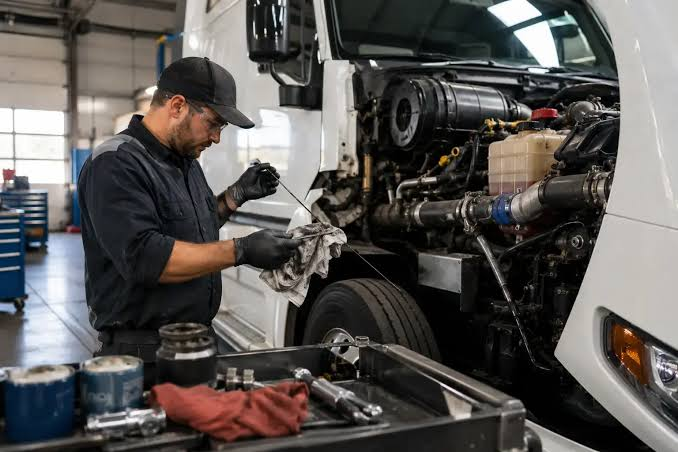
A qualified technician should document findings with photos, measurements, fluid samples, and written notes. The inspection should include:
- Oil level, pressure, condition, and signs of metal contamination.
- Coolant level, pressure, leaks, and evidence of overheating.
- Compression or leak-down test results when appropriate.
- Fuel pressure, injector condition, and fuel-system contamination.
- Turbocharger, charge-air system, intake, and exhaust performance.
- Stored fault codes, active warnings, and prior repair history.
- Debris found in filters, drained oil, or coolant.
Match The Repair To The Damage
The location and severity of the damage should guide the repair path. Limited top-end problems, such as a failed head gasket, damaged valves, or cylinder-head concerns, may be repairable without replacing the complete engine if the lower end is sound.
Worn liners, pistons, rings, bearings, or connecting-rod components may support an in-frame rebuild when the block and crankcase are usable. In contrast, a cracked block, severe cylinder-wall scoring, major bearing failure, or extensive metal contamination may justify replacement. A failed turbocharger, fuel pump, sensor, or cooling component can also cause serious symptoms without requiring a complete engine change.
Compare The Main Repair And Replacement Options
In-Frame Repair
An in-frame repair can be practical when the block and crankcase remain serviceable. It may reduce removal time and preserve existing accessories, but the technician must inspect carefully enough to ensure the repair addresses more than the visible symptom.
Full Rebuild
A full rebuild makes sense when several internal components show wear, but the engine core can be restored. Confirm that the quote includes machine work, dimensional checks, wear items, gaskets, seals, assembly labor, and final testing.
Remanufactured, Used, And New Engines
A remanufactured engine provides reliability when avoiding downtime is crucial. Inquire about the parts replaced, how the core was inspected, and whether labor is included in the warranty. Used engines are more affordable but need verification of mileage, history, storage conditions, and compatibility. New replacements offer better documentation of parts history and warranty coverage, but their cost should be weighed against the vehicle’s age, chassis, transmission, and expected remaining service life.
Build A Total Cost Comparison
Compare every option using the same categories instead of focusing only on the engine price:
- Repair package or engine purchase price.
- Removal, installation, calibration, and diagnostic labor.
- Freight, delivery timing, fluids, filters, belts, hoses, and seals.
- Related turbocharger, injector, cooling-system, or fuel-system repairs.
- Downtime, missed work, rental equipment, and replacement vehicle costs.
- Warranty value, expected service life, and likelihood of a second repair.
For example, a used engine with a lower upfront price may appear attractive. However, a remanufactured unit that arrives sooner, offers stronger warranty protection, and reduces the risk of repeat labor can yield a better financial outcome for a truck that must return to service quickly.
Check Compatibility, Emissions, And Electronics
Engines from the same family are not always direct replacements. Before ordering, verify the engine serial number, configuration, horsepower, and torque rating, mounting points, transmission connection, oil pan, accessory layout, wiring, cooling connections, exhaust routing, and control module requirements. Match the engine to the truck’s actual duty cycle, not simply its physical size.
Emissions and electronic systems also need attention. Unresolved DEF, sensor, aftertreatment, or module faults can cause derates, warning alerts, reduced power, and additional downtime after installation.
Review The Provider And Use Maintenance Records
Before authorizing work, request a written scope that identifies the failure cause, the parts being installed, who performs machining and testing, and what warranty terms apply. Ask whether parts are new, remanufactured, requalified, or used. The provider should also explain what will be done to prevent the same failure from damaging the repaired or replacement engine.
Oil analysis, fault-code histories, driver notes, fuel-use trends, oil consumption, coolant loss, and repeated warning lights can reveal whether the failure developed from wear, overheating, poor lubrication, contamination, overloading, or a related component. These records turn a major repair decision from guesswork into a documented business decision.
A Practical Decision Process For Fleet Managers
- Stop the operation if continued use could cause further damage or pose a safety risk.
- Save fault codes, fluid samples, inspection photos, and maintenance records.
- Confirm the root cause through qualified testing.
- Compare realistic repair, rebuild, remanufactured, used, and new-engine options.
- Calculate total cost, including downtime and warranty exposure.
- Verify compatibility before ordering any engine or major component.
- Choose the option that best balances reliability, schedule protection, and expected service life.
Common Questions
Is A Used Engine Always The Cheapest Option?
No. Its purchase price may be lower, but unknown history, limited warranty coverage, and possible installation rework can increase total cost.
When Does A Rebuild Make More Sense Than Replacement?
A rebuild is often worthwhile when the block and major components remain within repairable limits, and the vehicle has enough remaining value to justify the work.
How Long Should An Engine Replacement Take?
Timing depends on parts availability, vehicle access, technician capacity, engine configuration, and unexpected damage found during removal.
What Warranty Questions Should Buyers Ask?
Confirm parts and labor coverage, mileage limits, claim procedures, maintenance requirements, installation rules, and exclusions before approving the job.
Conclusion
The right diesel engine repair path depends on evidence, not assumptions. A complete diagnosis, accurate total-cost comparison, compatibility review, and clear warranty terms help fleet operators choose the option that best protects uptime and future reliability in 2026.