

For businesses in the mattress, furniture, medical or comfort product industries, finding reliable memory foam manufacturers is an important decision. Memory foam is central to the quality of products, comfort and durability. Whether you are a retailer, distributor or product manufacturer, being able to source the right foam supplier has a direct influence on your brand reputation and customer satisfaction.
Searching for “memory foam manufacturers near me” is often more than just about convenience. It is a reflection of the need for reliable quality, consistent supply, quicker delivery and improved communication. Understanding the production process of memory foam, its properties to seek, and the means to assess suppliers will enable businesses to make informed and strategic decisions.
What Is Memory Foam and How Does It Work?
Memory foam is technically called viscoelastic polyurethane foam and is engineered to react to heat and pressure. When pressure is applied, it softens and contours in the shape of the body. Once the pressure is removed, it slowly falls back to its original shape. This slow rebound characteristic distinguishes memory foam from traditional foam materials.
This unique structure provides for even weight distribution and pressure relief, making memory foam popular in mattresses, pillows and cushioning solutions. Because it conforms to the shape of the body, it helps to increase comfort and support. For businesses, this property generates high demand in the market, especially in the premium and therapeutic products.
Manufacturers like Flexipol Foams Pvt. Ltd. make viscoelastic memory foam as well as other types of polyether polyurethane foams for different industrial applications. These materials are formulated in controlled ways to ensure consistency in performance.
Understanding the Manufacturing Process
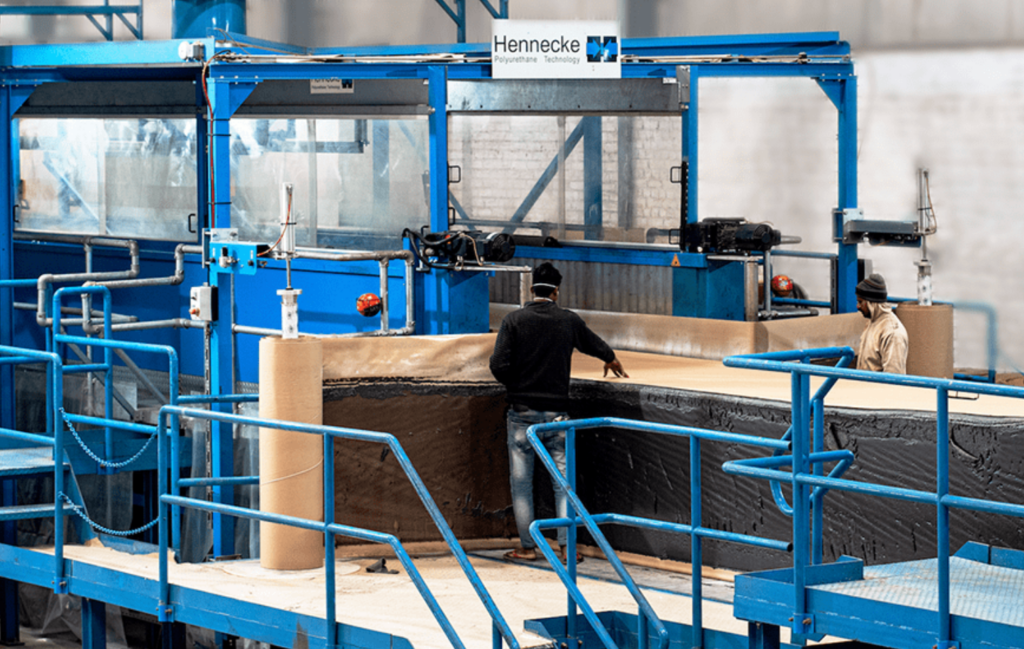
Memory foam manufacturing process involves Chemical reaction between polyols and isocyanates to give a foamed structure. The process must be carefully managed in order to create foam with specific density, firmness, and resilience characteristics. Variations in temperature, chemical ratios and curing conditions can have a significant impact on product performance.
After production, foam blocks are cured and then cut to form sheets or custom shapes according to the application requirements. The process of quality testing is an important part. Parameters including density, tensile strength, elongation and hardness are measured to ensure reliability.
Manufacturers that have been in business for a while and who specialise in polyurethane foam production often have advanced machinery and quality control procedures. This means consistency from batch to batch, which is important in businesses that depend on predictable standards of products.
Applications Across Multiple Industries
Memory foam is widely used across different sectors, making it a versatile material for businesses and retailers.
In the mattress and pillow industry, memory foam enhances comfort and pressure relief. It is commonly used as a top layer in mattresses to improve sleep quality.
In furniture manufacturing, viscoelastic foam improves seating comfort in sofas, chairs, and recliners. Retailers selling upholstered furniture often depend on foam manufacturers to supply materials with specific firmness and durability.
In medical and healthcare sectors, memory foam is used for therapeutic cushions, support wedges, and pressure-relief products. Because of its ability to distribute body weight evenly, it plays a role in comfort-based medical solutions.
The automotive, footwear, and packaging sectors also utilise polyurethane foam materials for cushioning and impact absorption.
Understanding your industry’s specific requirements allows you to select the most suitable foam type and supplier.
Why Local Manufacturers Matter
When businesses search for “memory foam manufacturers near me,” proximity is often a strategic decision rather than a simple preference. Working with manufacturers located closer to your business provides several operational benefits.
Reduced transportation time leads to faster delivery cycles. Shorter supply chains reduce the risk of delays and help businesses maintain inventory stability. Lower freight costs can also improve overall profit margins, especially when ordering in bulk.
Proximity supports better communication. It becomes easier to discuss custom requirements, inspect materials if necessary, and resolve technical issues. Local partnerships often strengthen long-term collaboration and responsiveness.
In industries where demand can fluctuate, having a nearby manufacturer improves flexibility and response time, helping businesses adapt quickly to market changes.
Evaluating Product Quality and Technical Specifications
Quality should be the first consideration when selecting a memory foam manufacturer. Consistency in density, firmness, and resilience determines how the final product performs for customers.
Density affects durability and support. Higher density foam generally offers better longevity and structure. Firmness determines comfort level, which may vary depending on whether the foam is used in mattresses or seating.
Manufacturers with dedicated testing facilities check physical and mechanical properties to maintain uniform standards. Businesses should ensure the supplier provides clear technical specifications and adheres to industry compliance and safety standards.
Understanding these technical parameters helps retailers and product brands maintain consistent product performance in the market.
Customisation and Product Flexibility
Different businesses require different foam configurations. Some need large blocks for mattress cores, while others may require thin sheets or uniquely cut shapes for furniture or healthcare products.
Manufacturers that offer customisation capabilities add value by tailoring materials according to business needs. Flexibility in size, density options, and finishes helps companies develop unique products without compromising performance.
Customisation also supports private label brands looking to differentiate themselves in competitive segments. The right manufacturing partner can align foam characteristics with specific market positioning.
Supply Chain Reliability and Scaling
Reliability is essential in supplier selection. Businesses must assess whether a manufacturer can maintain consistent production volumes over time. Rapid business growth or seasonal spikes in demand require suppliers who can scale operations efficiently.
A manufacturer’s infrastructure, production capacity, and quality control systems influence reliability. Established foam producers with structured processes are generally better positioned to handle varying order sizes without sacrificing quality.
Building a long-term partnership with a dependable manufacturer reduces risk and ensures business continuity.
The Competitive Advantage of Quality Memory Foam
From a retailer’s perspective, product differentiation is key. High-quality memory foam enhances customer satisfaction, leading to repeat purchases and stronger brand loyalty.
Comfort, pressure relief, and durability are major selling points in mattress and furniture markets. When products meet customer expectations consistently, businesses build trust. Reliable foam quality forms the foundation of this trust.
For manufacturers and retailers alike, investing in quality raw materials such as dependable memory foam translates into stronger market positioning and reduced customer complaints.
Conclusion
Finding the right memory foam manufacturer involves more than simply searching for suppliers nearby. Businesses and retailers must evaluate product quality, technical specifications, customisation capabilities, and supply chain reliability.
Memory foam plays a vital role across multiple industries, including mattresses, furniture, healthcare, and automotive applications. Its comfort, pressure-relieving properties, and durability make it a valuable material in competitive markets.
Partnering with a capable and experienced manufacturer ensures consistency, operational efficiency, and long-term growth. By carefully assessing supplier capabilities and building strong collaborations, businesses can confidently deliver products that meet customer expectations and support brand success.