

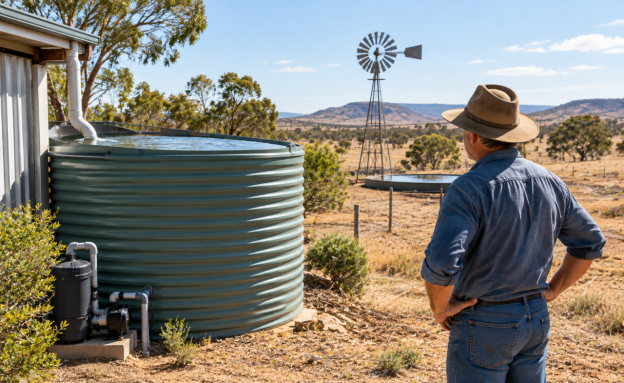
Dry spells in Australia rarely give you much warning. The rain tapers off, the temperature climbs, and a tank that seemed comfortably full back in April is suddenly looking thin by December. It creeps up on you. Whether you’re looking after a rural property, a suburban block, or a commercial site, a solid water storage plan is what carries you through when supply gets tight.
Here’s what actually matters: what to store, how to store it, and how to keep it clean and ready for the moment you need it.
Understanding Water Storage Basics
What types of water storage systems are available?
You’ve got three main options. Above-ground tanks, underground cisterns, and rainwater harvesting setups. Above-ground poly tanks turn up everywhere in Australia, mostly because they’re cheap and quick to install. Underground cisterns save space and keep water cooler and more stable, which is handy. On larger rural and commercial properties, you’ll sometimes see lined earthen reservoirs or modular underground systems doing the heavy lifting for bigger volumes.
How much capacity you need comes down to a few things: the rainfall your region usually gets, how much water your household or operation goes through, and how long the dry stretches tend to drag on. A family of four in a low-rainfall area isn’t in the same boat as a small farm or a commercial site.
One thing worth doing before you install anything: check your local council rules and state guidelines. Plenty of councils want a permit once a tank passes a certain volume, and there are often restrictions on how you can use stored water, especially when it comes to drinking versus irrigation.
Practical Storage Solutions
How should above-ground tanks be installed and maintained?
Give your above-ground tank a level, compacted base to sit on. A concrete slab or a crushed rock pad usually does the job and stops the tank from settling unevenly or straining under its own weight. Screen the inlet so insects and debris stay out, and point the overflow outlet away from your foundation.
Underground systems don’t eat into your surface space, and because they’re buffered from temperature swings, bacterial growth slows down. If looks or space are a concern, they’re worth a look – just know the upfront installation costs run higher.
Rainwater harvesting is one of the smarter ways to stretch what you’ve got. A roof catchment system paired with first-flush diverters, kept in good nick, can add a fair bit to your supply through the shoulder seasons. Greywater systems reuse water from your sinks, showers, and laundry, and they earn their keep for garden irrigation once restrictions kick in.
And if you run dry partway through the season, bulk water delivery services for tanks are a dependable way to top up without committing to permanent infrastructure.
Maintenance and Water Quality
How often should stored water systems be inspected?
Twice a year is a good rhythm. Once before the dry season sets in, and again after any decent rain. Look for cracks, sediment building up, and any hint of algae or contamination near the inlets and overflow points.
Cleaning gets forgotten a lot, which is a shame because it matters. Sediment settles at the bottom over time and can turn into a home for bacteria. Most tanks want a full clean every two or three years – draining, scrubbing, sanitising, then refilling.
Keeping an eye on how much you’re using saves you from nasty surprises. A basic float valve with an external indicator gives you a daily glance at your reserves. If you want more, digital sensors and automated alerts have come down in price and suit homes and businesses alike.
The trick with long dry periods is topping up beforehand, not scrambling once you’re already low. Talk to your supplier or delivery service well ahead of peak demand, because that’s when the wait times blow out.
Make Water Scarcity a Problem You’ve Already Solved
Good water storage was never about owning the biggest tank. It’s about knowing your demand, staying on top of maintenance, and having a backup you can trust when things turn. Start by auditing what you’ve got, find the weak spots, and build toward a setup that holds up through the driest summer Australia can throw at you!