

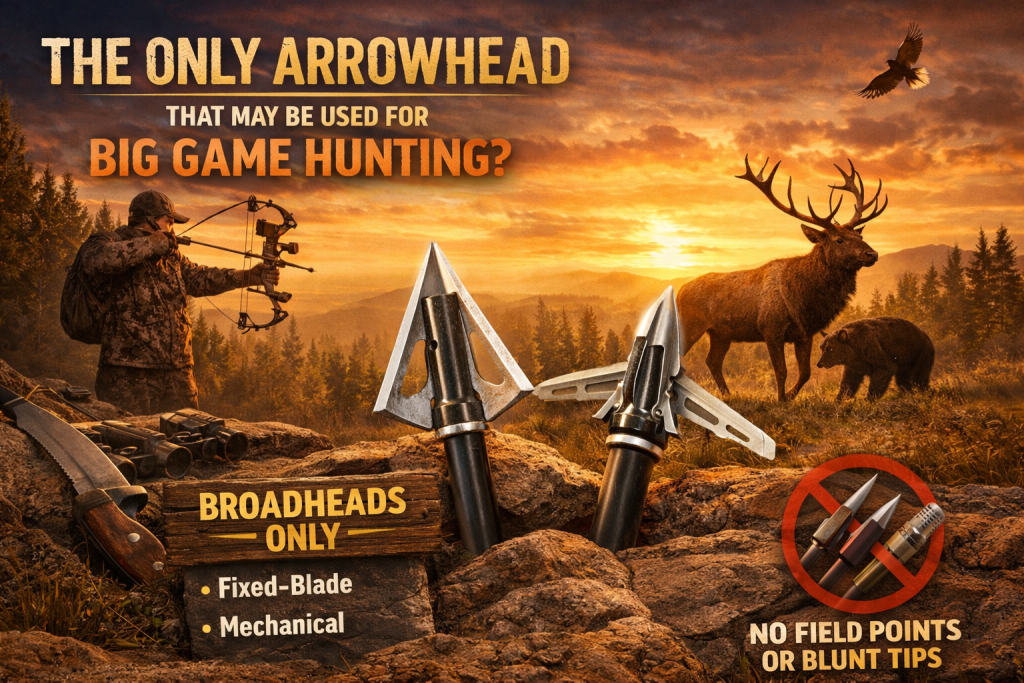
The only arrowhead that may be used for big game hunting, under most wildlife regulations, is a broadhead. Game agencies across North America and many other regions permit broadheads because they deliver a wide cutting edge designed for ethical harvest. Other arrowhead styles such as field points, blunt points, or judo points remain restricted to practice or small targets and do not meet legal or ethical standards for large animals.
Broadheads serve one main purpose: create a clean, lethal cut that leads to rapid blood loss and humane results. This requirement sits at the center of hunting laws, equipment checks, and conservation rules.
Definition of a Broadhead Arrow
A broadhead arrow uses a razor-edged tip designed specifically for hunting animals with thick muscle and bone structure. These arrowheads feature multiple blades that expand the wound channel rather than relying on blunt force.
Game departments approve broadheads because:
- They slice tissue instead of piercing narrowly
- They increase blood trails for recovery
- They reduce prolonged suffering
- They align with ethical harvest standards
Why Broadheads Are the Only Legal Choice for Big Game
Wildlife laws focus on clean harvests and population balance. Big game animals such as deer, elk, moose, bear, and wild boar require equipment that performs reliably under real hunting conditions.
Broadheads meet these requirements due to:
- Wide cutting diameter
- Sharp blade design
- Proven performance on large animals
- Predictable penetration patterns
Other arrowheads lack cutting blades and cause unnecessary injury rather than swift harvest. For this reason, regulations restrict their use.
Types of Broadheads Approved for Big Game
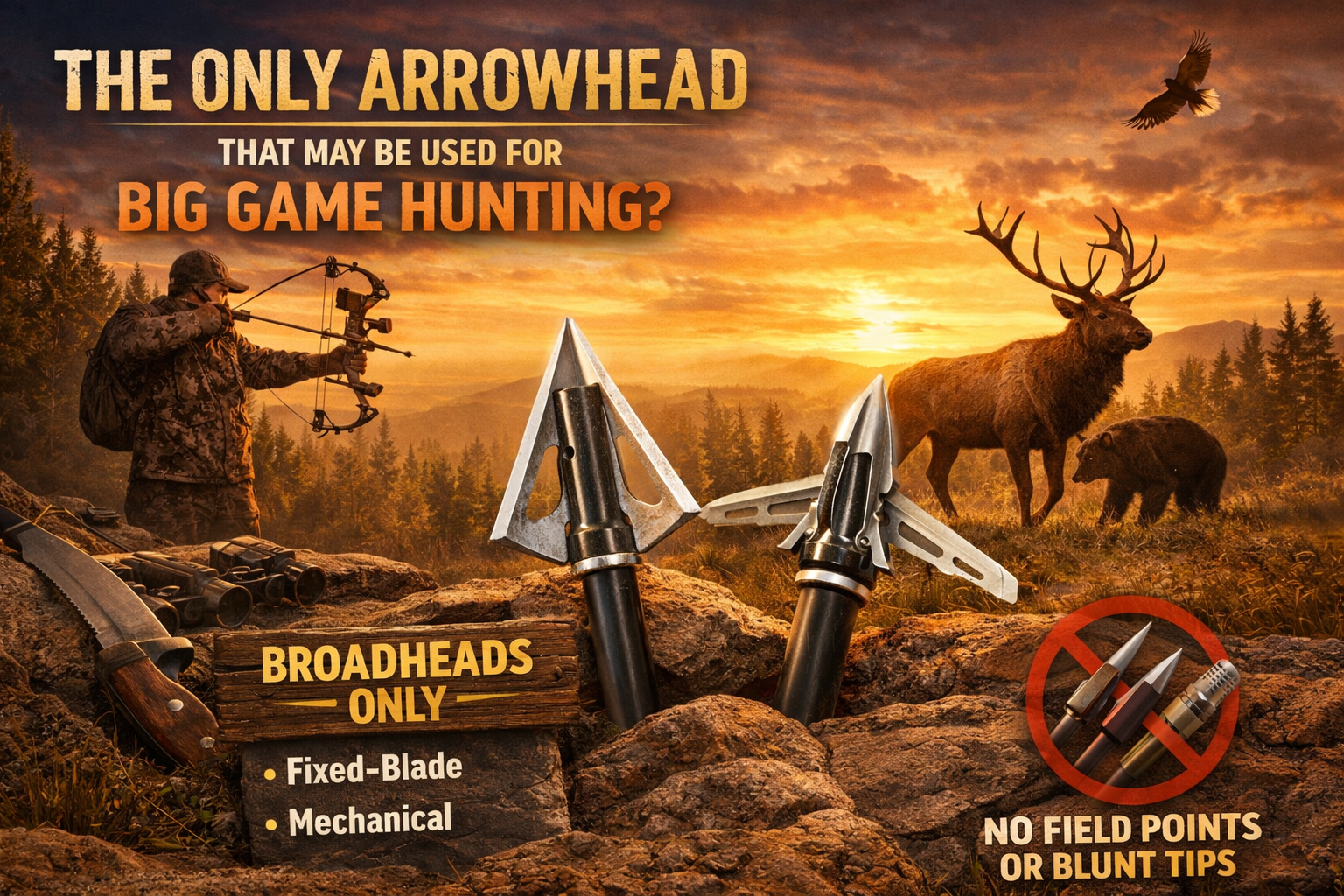
Broadheads fall into two main categories. Both remain legal in many regions, provided they meet blade and width rules.
Fixed-Blade Broadheads
Fixed-blade broadheads feature blades that remain open at all times.
Common traits
- Strong construction
- Consistent flight at close range
- Reliable penetration
- Fewer mechanical parts
Best suited for
- Traditional bows
- Recurve bows
- Longbows
Mechanical (Expandable) Broadheads
Mechanical broadheads keep blades folded during flight and open on impact.
Common traits
- Field-point-like flight
- Larger cutting diameter
- Reduced wind drift
- More moving components
Best suited for
- Compound bows
- High draw-weight setups
Broadhead Legal Requirements by Regulation
Most hunting authorities share similar rules, though measurements vary by location.
Common Broadhead Rules
- Minimum of two cutting edges
- Blades must remain sharp
- No explosive or poisoned tips
- No barbed designs
- No electronic components
Hunters must check local regulations prior to each season since dimensions and blade counts vary.
| Arrowhead Type | Legal for Big Game | Reason |
|---|---|---|
| Broadhead (Fixed) | Yes | Sharp blades create lethal cuts |
| Broadhead (Mechanical) | Yes | Expanding blades meet cutting standards |
| Field Point | No | Narrow penetration only |
| Blunt Point | No | Relies on impact force |
| Judo Point | No | Designed for small targets |
| Bodkin Point | No | Lacks cutting edges |
Minimum Broadhead Specifications
Most wildlife agencies require broadheads to meet specific measurements.
Standards
- Blade width: 7/8 inch or greater
- Blade count: two or more
- Edge style: sharpened steel
- Tip material: metal only
Some regions ban mechanical designs or require fixed blades during certain seasons. Crossbow regulations may differ from vertical bow rules.
Ethical Reasons Broadheads Are Required
Ethical harvest principles drive hunting laws. Broadheads support these principles by reducing recovery time and minimizing suffering.
Broadheads allow:
- Faster blood loss
- Clear tracking paths
- Higher recovery rates
- Reduced risk of lost animals
These outcomes support conservation goals and public trust in hunting practices.
Performance Factors That Matter
Broadhead effectiveness depends on several elements beyond legality.
Blade Sharpness
Sharp blades slice tissue cleanly. Dull edges tear muscle and reduce effectiveness.
Arrow Weight
Heavier arrows maintain momentum through bone and muscle.
Bow Setup
Draw weight and arrow spine alignment affect penetration.
Shot Placement
Accuracy remains essential regardless of arrowhead choice.
Fixed-Blade vs Mechanical Broadheads: Practical View
Both designs remain legal in many regions, though each serves different hunting styles.
Fixed-Blade Strengths
- High durability
- Deep penetration
- Works well with lower draw weight
Mechanical Strengths
- Wider wound channel
- Flatter flight path
- Less tuning required
Hunters select based on equipment, skill level, and local rules rather than trend or brand image.
Broadhead Materials Used Today
Broadheads use durable metals that maintain sharpness under impact.
Common Materials
- Stainless steel
- Carbon steel
- Titanium blends
Blade thickness and edge angle play a major role in durability and cutting efficiency.
Maintenance and Inspection Before Hunting
Broadheads require regular checks prior to use.
Pre-Hunt Checklist
- Confirm blade sharpness
- Tighten blade screws
- Inspect ferrule for cracks
- Match broadhead weight to field points
Proper maintenance improves accuracy and safety in the field.
Why Practice Points Are Not Allowed
Field points share weight similarity with broadheads for practice sessions. Their design lacks cutting edges, making them unsuitable for hunting large animals.
Reasons for restriction:
- Minimal tissue damage
- Poor blood trails
- High risk of non-lethal injury
Game agencies prohibit their use to maintain ethical standards.
Common Myths About Broadhead Rules
Myth 1: Any sharp point works
Only multi-blade cutting heads qualify.
Myth 2: Bigger cutting diameter means better results
Penetration and accuracy matter more than size.
Myth 3: Mechanical designs face bans everywhere
Many regions approve mechanical models under specific rules.
Broadheads and Conservation Laws
Hunting laws aim to balance wildlife populations. Broadhead-only rules support this mission by reducing wounded-animal loss and promoting responsible practices.
Broadheads align with:
- Fair chase principles
- Wildlife sustainability
- Hunter accountability
The only arrowhead that may be used for big game hunting is the broadhead, approved due to its cutting design, ethical performance, and compliance with wildlife laws. Fixed-blade and mechanical versions both meet legal standards in many regions, provided they follow blade, width, and construction rules. Other arrowheads fail to meet these requirements and remain restricted to practice or small-game use.