

JFK Assassination Game refers to a class of interactive digital simulations that recreate the events surrounding the assassination of President John F. Kennedy on November 22, 1963, primarily set in Dealey Plaza, Dallas. These games focus on perspective-based mechanics, historical reconstruction, and player-driven outcomes rather than arcade-style action. The subject matter places them in a controversial niche that mixes history, ethics, and interactive media.
Concept and Core Idea
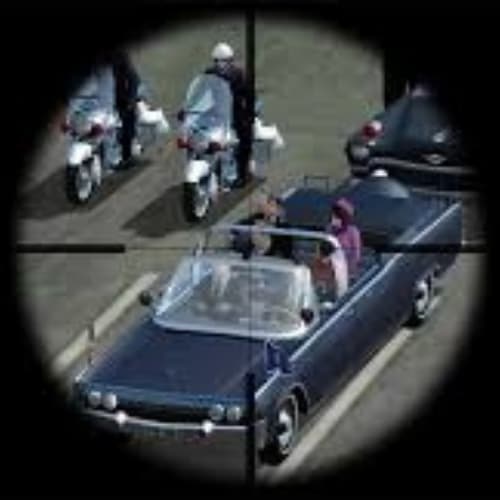
The central idea revolves around recreating Dealey Plaza with high geographic accuracy and allowing the player to experience the event from a specific viewpoint. Most versions present a first-person or fixed-position format where timing, positioning, and line-of-sight matter more than fast reflexes.
Developers frame the experience as a simulation rather than entertainment. The goal focuses on reconstructing trajectories, angles, and environmental variables present during the assassination.
Main Gameplay Mechanics
These games rely on restraint and precision rather than traditional combat systems.
Typical mechanics include:
- Fixed-location positioning within Dealey Plaza
- Limited movement or camera rotation
- Realistic timing windows measured in seconds
- Environmental variables such as distance, elevation, and obstacles
- Absence of scoring systems or rewards
The player interacts with the environment in a controlled manner. Every action has permanent consequences within a single session.
Perspective Options Used
Different versions use varied viewpoints to frame the experience.
| Perspective Type | Description |
|---|---|
| Fixed Shooter View | Player remains in one elevated position with restricted motion |
| Observer Mode | Player watches reconstructed events without interaction |
| Forensic Replay | Trajectories and angles visualized after player input |
| Timeline Control | Allows pausing or rewinding short segments |
Historical Accuracy Focus
Accuracy remains a major design goal. Developers rely on:
- Zapruder film frame data
- Dealey Plaza measurements
- Ballistics reports
- Weather and lighting conditions from official records
Street layout, building placement, and vehicle speed usually match archival data with minimal artistic adjustment.
Technical Design Elements
The technical structure emphasizes realism over visual spectacle.
Key elements include:
- Real-world scale modeling
- Physics-based projectile paths
- Frame-locked timing systems
- Low-latency input handling
Graphics remain functional rather than stylized. Textures stay muted to match period photography.
Ethical Debate Around the Genre
This category attracts strong opinions. Critics argue that turning a real assassination into an interactive experience crosses moral boundaries. Supporters counter that the format serves as a digital reconstruction tool rather than entertainment.
Points frequently raised in discussion:
- Respect for historical tragedy
- Educational versus exploitative framing
- Lack of sensational visuals
- Absence of reward-driven systems
The debate shapes how developers present disclaimers and contextual material.
Educational and Research Use
Some users approach these games as analytical tools. By recreating angles and timing, players test hypotheses related to:
- Bullet trajectory feasibility
- Reaction time constraints
- Line-of-sight obstructions
This application attracts students of history, criminology, and physics rather than mainstream gamers.
Platform Availability
Most JFK assassination games appear as:
- PC-based simulations
- Browser-based experimental projects
- Academic or independent releases
Console availability remains extremely rare due to content sensitivity and platform policies.
Comparison With Traditional History Games
| Feature | JFK Assassination Game | Traditional History Games |
|---|---|---|
| Player Freedom | Highly restricted | Broad exploration |
| Action Elements | Minimal | Combat-driven |
| Reward Systems | None | XP, levels, achievements |
| Narrative Style | Event reconstruction | Fictionalized campaigns |
| Session Length | Short, focused | Long-form gameplay |
This contrast highlights how narrow and purpose-driven the format remains.
Visual and Audio Design Choices
Sound design stays restrained. Ambient city noise, distant traffic, and crowd murmurs replace dramatic music. Visual filters simulate 1960s film stock rather than modern cinematic effects.
Design choices avoid exaggerated animations. Subtlety remains a guiding rule.
Legal and Distribution Challenges
Distribution presents obstacles due to:
- Content moderation policies
- Public sensitivity
- Payment processor restrictions
Some projects circulate only through academic archives or developer-hosted sites instead of mainstream platforms.
Player Reception Trends
User response tends to split into clear categories:
- Academic or analytical interest
- Historical curiosity
- Ethical objection
Mainstream gaming audiences rarely engage deeply with the format due to its narrow scope and serious tone.
Player Intent Categories
| User Type | Primary Motivation |
|---|---|
| Research-Oriented | Testing historical scenarios |
| Educational | Visual learning aid |
| Curiosity-Based | Experiencing a reconstructed event |
| Critical | Evaluating moral implications |
Longevity and Replay Value
Replay value remains limited by design. Each session follows the same fixed timeline with minor variable adjustments. The experience favors depth of analysis over repetition.
Comparison With Documentary Media
Interactive simulations differ from documentaries by allowing direct manipulation of variables. This hands-on element changes perception, as users engage with space and timing rather than passive viewing.
Cultural Sensitivity Measures
Developers usually apply safeguards such as:
- Content warnings
- Neutral language
- Lack of glorification
- Contextual historical notes
These measures attempt to maintain respect while allowing exploration of historical mechanics.
Future Direction of This Niche
Future projects may shift toward:
- Fully non-interactive forensic visualizers
- Educational classroom tools
- Museum-based installations
Commercial expansion appears unlikely due to ethical and regulatory pressure.
The JFK Assassination Game occupies a narrow digital space shaped by restraint, realism, and controversy. It avoids traditional entertainment formulas and instead functions as a controlled reconstruction tool. Its value lies in spatial awareness and analytical engagement rather than excitement or competition.