
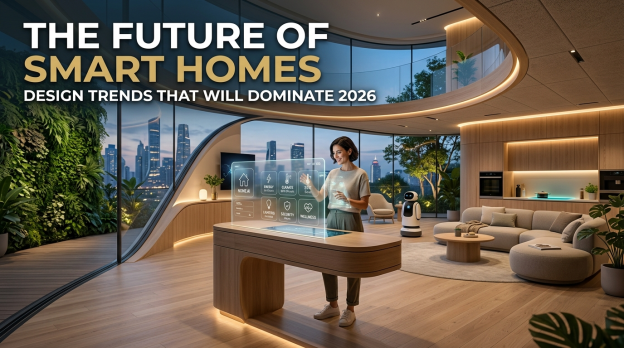
The concept of a smart home is no longer limited to voice assistants turning lights on and off. In 2026, smart homes are evolving into deeply personalized, wellness-focused, and seamlessly integrated living spaces that adapt to human behavior rather than demanding attention from it. Technology is becoming quieter, less visible, and more intuitive — blending naturally into architecture and interior design.
Modern homeowners are no longer impressed by flashy gadgets alone. Instead, they want homes that improve comfort, energy efficiency, mental well-being, flexibility, and everyday convenience. This shift is driving some of the biggest home design trends shaping 2026.
From invisible technology and wellness-centered spaces to multifunctional rooms and adaptive lighting, the future of smart homes is becoming more human-centric than ever before.
Smart Homes Are Becoming “Invisible”
One of the biggest smart home trends in 2026 is the rise of invisible technology. Instead of filling homes with bulky devices and visible screens, designers are integrating smart systems directly into the architecture itself.
Hidden speakers, concealed climate control systems, motorized cabinetry, integrated charging drawers, and flush-mounted lighting are replacing traditional gadget-heavy setups. Homeowners want technology that works quietly in the background while maintaining clean and elegant interiors.
This movement toward “disappearing tech” reflects a broader design philosophy: technology should enhance the home experience without visually dominating it.
Modern smart homes in 2026 prioritize:
- Minimal visual clutter
- Seamless automation
- Voice and app-controlled systems
- Concealed smart appliances
- Integrated lighting and shading
- Hidden home security systems
The result is a smarter home that feels calmer, warmer, and more luxurious.
Wellness-Centered Design Is Becoming Essential
Another major trend shaping smart homes in 2026 is wellness-focused living. Homeowners are increasingly prioritizing spaces that support mental health, relaxation, better sleep, and cleaner indoor environments.
Smart technology is now being used to improve wellness in subtle but meaningful ways. Examples include:
- Circadian lighting systems that adjust throughout the day
- Smart air quality monitoring
- Humidity-balancing climate systems
- Noise-reducing acoustic materials
- Automated aromatherapy integration
- Smart showers and spa-inspired bathrooms
Modern HVAC systems also play a critical role in creating healthier indoor environments. Many homeowners are investing in advanced cooling and filtration solutions through professional air conditioning services houston tx providers to improve comfort, airflow, and energy efficiency within smart homes.
Designers are also incorporating natural materials like wood, stone, clay, and linen to create calming environments that reduce stress and improve emotional comfort.
This trend is often referred to as “Invisible Wellness,” where health-enhancing features become seamlessly integrated into the home without feeling clinical or overly technological.
In 2026, the smartest homes are not necessarily the most futuristic-looking — they are the ones that make people feel healthier, calmer, and more comfortable.
Multifunctional Spaces Are Replacing Traditional Rooms
The way people use their homes has changed dramatically over the last few years, and home design is evolving to match those new lifestyles. Multifunctional spaces are now one of the defining trends of modern smart homes.
Instead of rigid room layouts, homeowners are embracing flexible spaces that can adapt throughout the day.
Examples include:
- Guest rooms that double as home offices
- Dining rooms that transform into workspaces
- Living rooms with modular furniture
- Sliding partitions for privacy and flexibility
- Smart storage systems for compact living
This shift is especially important in urban homes and apartments where maximizing space has become essential.
Technology is helping drive this transformation through:
- Automated furniture systems
- Smart zoning controls
- Voice-controlled lighting scenes
- Adjustable work surfaces
- Motorized room dividers
Homes in 2026 are designed to evolve alongside modern lifestyles rather than forcing people to adapt to outdated layouts.
Adaptive Lighting Is Transforming Interior Design
Lighting is no longer just functional — it is now one of the most important elements of smart home design.
In 2026, adaptive lighting systems are becoming a core feature in modern interiors. These systems automatically adjust brightness, warmth, and mood depending on the time of day, activity, or even the homeowner’s emotional preferences.
For example:
- Bright white lighting for productivity during work hours
- Warm ambient lighting for relaxation in the evening
- Motion-triggered night lighting
- Automated daylight synchronization
- Personalized lighting scenes controlled through apps or voice commands
This trend combines aesthetics, energy efficiency, and wellness into one intelligent design solution.
Layered lighting is also becoming more popular, with homeowners combining:
- Ambient lighting
- Task lighting
- Accent lighting
- Architectural lighting
Rather than relying on a single overhead fixture, homes are using lighting to create atmosphere, comfort, and emotional balance.
Smart Kitchens Are Becoming Lifestyle Hubs
The kitchen remains the heart of the modern home, but in 2026 it is becoming smarter, more connected, and more integrated into daily life.
Today’s smart kitchens feature:
- AI-powered appliances
- Guided cooking systems
- Remote monitoring
- Energy-efficient smart refrigerators
- Touchless faucets
- Integrated display systems
- Smart inventory management
However, modern kitchen design is also moving toward elegance and subtlety. Homeowners want appliances that blend naturally into cabinetry and overall aesthetics rather than standing out as oversized tech products.
The combination of utility and luxury is becoming the defining characteristic of smart kitchen design in 2026.
Sustainability and Energy Efficiency Continue to Grow
Sustainability remains one of the strongest influences on future home design. Smart homes are increasingly being built around energy efficiency, long-term durability, and eco-conscious living.
Homeowners are investing in:
- Smart thermostats
- Solar-ready systems
- Automated energy monitoring
- EV charging stations
- Water-saving fixtures
- Smart irrigation systems
- Energy-efficient appliances
Many homeowners upgrading to smart climate systems are also searching for reliable ac installation houston tx services to support energy-efficient cooling technology and advanced home automation integration.
The goal is not only environmental responsibility but also long-term cost savings and home resilience.
Sustainable design in 2026 is less about trends and more about practicality. People want homes that can adapt to future energy demands while remaining comfortable and efficient.
Privacy and Security Are Becoming Major Priorities
As smart homes become more connected, concerns around privacy and cybersecurity are growing as well. Because of this, homeowners are becoming more selective about the technologies they adopt. Reliability, security, and user control are now critical decision-making factors.
Many consumers are demanding:
- Better data privacy
- Local device control
- More reliable automations
- Stronger encryption
- Reduced dependence on cloud systems
In response, brands are focusing on creating simpler, more intuitive smart home ecosystems that prioritize stability and user experience.
The Rise of “Analog Rooms”
Interestingly, as smart homes become more advanced, many homeowners are also creating technology-free spaces within their homes.
Known as “analog rooms,” these areas are designed to encourage relaxation, creativity, and face-to-face interaction.
These spaces often include:
- Reading nooks
- Music corners
- Board game areas
- Meditation rooms
- Device-free lounges
This trend reflects a growing desire for balance between technology and mindful living.
The future smart home is not about constant digital stimulation — it is about using technology intentionally to improve quality of life.
Final Thoughts
The future of smart homes in 2026 is no longer centered around flashy gadgets or futuristic aesthetics alone. Instead, the industry is moving toward seamless integration, wellness-focused living, adaptive spaces, and intelligent design that quietly improves everyday life.
Technology is becoming more invisible yet more powerful. Homes are becoming more flexible, personalized, sustainable, and emotionally supportive. At the same time, homeowners are seeking healthier relationships with technology by balancing automation with intentional living.
The smart homes that will dominate 2026 are not simply the most connected — they are the ones designed around real human needs.
As design and technology continue to merge, the modern home is evolving into something far greater than a place to live. It is becoming an intelligent environment built to support comfort, productivity, wellness, and long-term sustainability.